
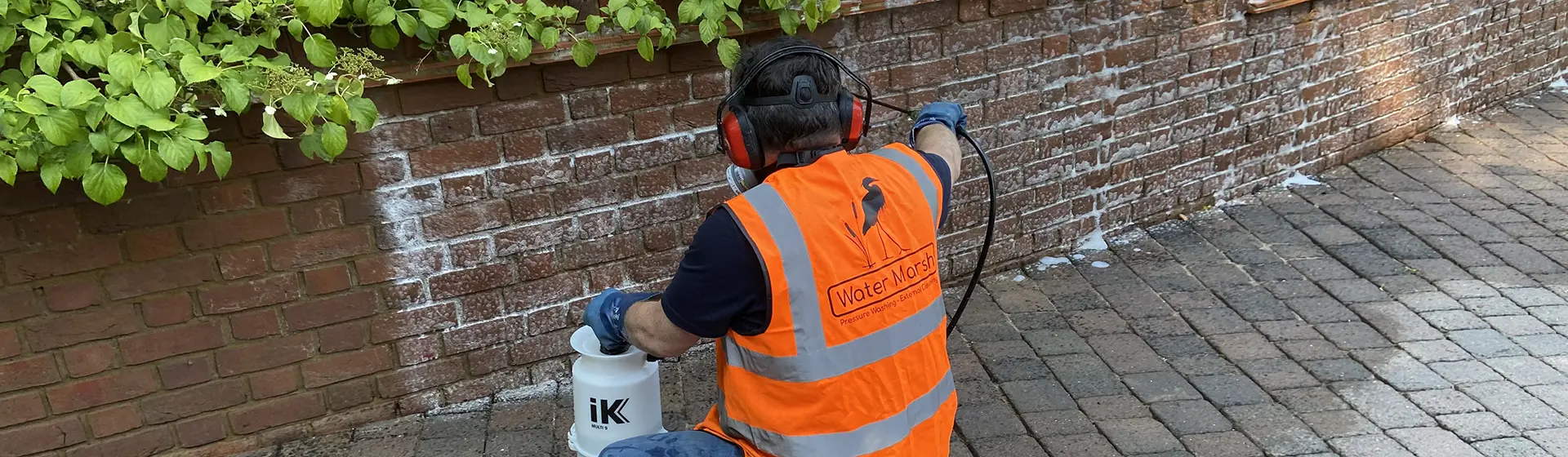
Reveal the character of your brickwork
Traffic pollution, biological growth and residues from building work can hide the colour and character of brickwork. Water Marsh cleans residential, commercial and historic masonry using methods selected for the surface, its condition and the contamination present.
What looks like ordinary dirt may be salts, metal staining, paint or a hard pollution crust. Identifying the likely cause helps us choose an appropriate treatment and explain the finish you can realistically expect.
Stains and contamination we assess
- Pollution and dark deposits: carbon, traffic film, soot, smoke staining and black crusts, including deposits around sheltered architectural details.
- Biological growth: algae, moss, lichen, mould and marks left by ivy or other vegetation.
- Salts and mineral deposits: efflorescence, lime deposits and more complex mineral crusts.
- Metal staining: rust, iron and copper marks from fixings, rainwater goods and other building elements.
- Building residues and coatings: mortar smears, cement haze, paint, graffiti and residual graffiti shadows.
- Other contamination: oil, grease, tar, bitumen, bird fouling, water-run marks and ingrained dirt.
Stain colour offers clues, but does not establish the cause. Black marks may be pollution or biological growth; green staining may be algae or copper. Recurring deposits can also point to a moisture source that needs attention separately from cleaning.
A method chosen for the masonry
There is no single treatment for every brick wall. Depending on the assessment, we may use DOFF steam cleaning, TORC, controlled pressure cleaning, specialist chemical treatments, paint removal or biological treatments.
DOFF uses heat with controlled water pressure and flow. TORC uses a swirling mixture of air, water and fine granulate. The choice depends on the masonry and contamination; neither system is automatically suitable for every surface.
Older brick faces, weak mortar and previous repairs need particular care. Excessive pressure or unsuitable products can alter the surface. For sensitive masonry or complex work, a test area helps establish the appropriate method and expected finish.
Cleaning and restoration: agree the right scope
Cleaning can reveal brick colour and architectural detail, but it cannot replace missing material, rebuild failed mortar or reverse severe spalling. Natural variation and weathering may remain, especially on historic buildings.
If we identify deteriorated masonry or repair needs, these are discussed separately. Our aim is an appropriate improvement that respects the building’s character.
Tell us about your brickwork
Send your postcode, overall photographs of each elevation, close-ups of the material and staining, and views of access routes. We can make an initial assessment from photographs and advise whether a survey or test area is needed before finalising the work.
Your questions
Can you remove paint or graffiti from brick?
Many coatings can be removed or reduced. Results depend on the coating, brick porosity and condition. Deeply absorbed pigments may leave a shadow; a test area can help establish what is achievable.
Will white deposits return after cleaning?
They can if moisture continues to carry salts to the surface. Cleaning addresses visible deposits; a recurring problem may need investigation of rainwater goods, drainage or other moisture sources.
Will the brickwork look new?
It may look substantially cleaner, but age, wear, repairs and natural colour differences remain. We agree an appropriate result rather than promise a uniformly new appearance.
Can you quote from photographs?
Often, photographs provide a useful starting point. Larger, historic or heavily contaminated buildings may need a site survey and test area before a final quotation.