
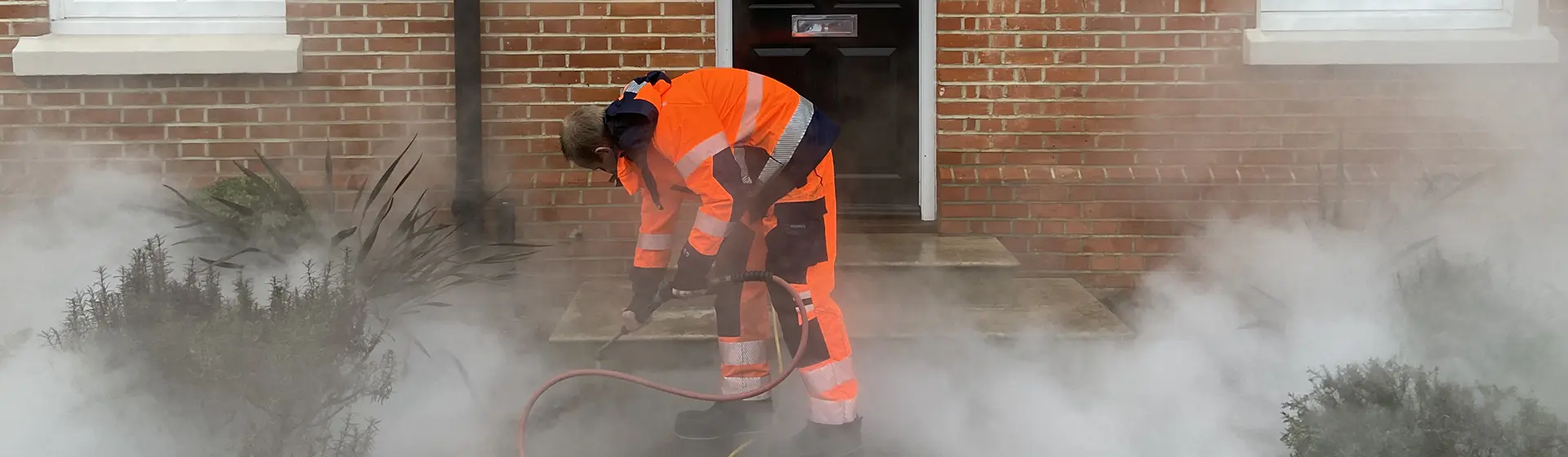
How the DOFF system works
Water Marsh uses the DOFF Integra, a superheated-water cleaning system. It can reach up to 150°C at the nozzle, with operator-controlled temperature and pressure and a water flow of around five litres per minute. The treatment can therefore be adjusted to the surface being cleaned.

Where we use it
DOFF can be suitable for masonry façades, brick walls, stone entrances, porticos and other architectural details. It can help remove dirt and biological growth such as algae and moss. Paint and graffiti removal can also be assessed, depending on the coating and underlying surface.
Assessment and test areas
Heat alone does not make every surface suitable for cleaning. We consider the material, pointing, weathering and previous treatments, using a test area where appropriate to establish a suitable method and expected finish. This is especially valuable on historic buildings and delicate details.
Tell us about your project
Send an overall view, close-ups and your postcode. Tell us which surfaces are affected and whether you know of any coatings or previous treatments. We will advise on the next step and whether a site assessment is appropriate.
Your questions
Is DOFF the same as ordinary pressure washing?
DOFF combines high-temperature water with controlled low pressure. The heat plays a central role in cleaning, while conventional pressure washing relies more on water pressure.
Is it suitable for all stone and brick?
Suitability depends on the material and its condition. We assess the surface before agreeing the treatment.
Can steam cleaning affect existing paint?
Deteriorated or poorly bonded paint can soften, flake or detach during cleaning. We assess coatings and discuss the intended treatment and its limitations before work starts.
Will the result be completely uniform?
Natural materials, weathering and earlier repairs can produce variations in colour and texture. A test area helps set realistic expectations; a uniform finish cannot be guaranteed.
Do you need a water supply?
An external water supply is normally required unless another arrangement has been agreed. Access, drainage and any power requirements are discussed during planning.